Healthcare / Product Design
Rainer Monitor Platform
Redesigning a patient monitoring platform for modern clinical workflows
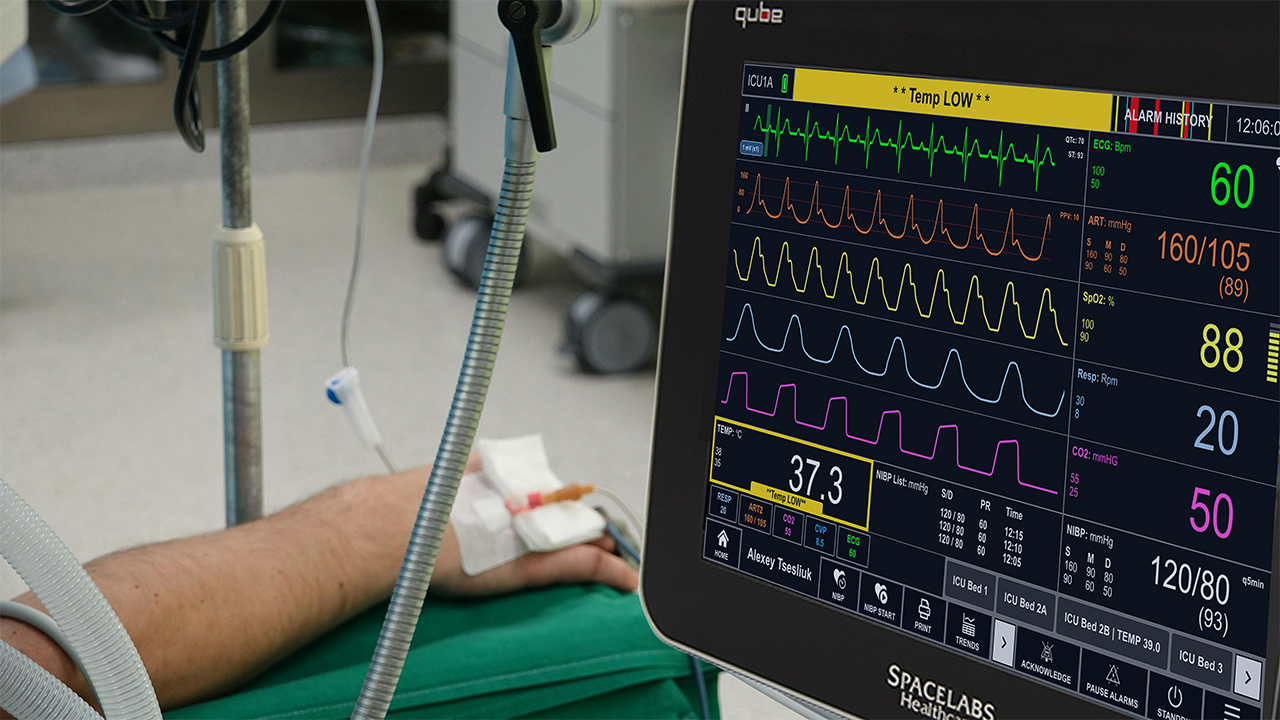
The Problem
Spacelabs' existing patient monitoring software had an outdated interface that didn't scale well to modern display sizes or touch workflows. Clinicians reported difficulty finding critical vitals during high-pressure scenarios, and the UI was inconsistent across product lines.
Constraints
- Must support updated and legacy hardware (bedside monitors with varying resolutions)
- Regulatory requirements for medical device software (IEC 62304)
- Multi-product ecosystem — changes must propagate across 3+ product lines
- Clinical staff resistant to major workflow changes mid-deployment
- Accessibility requirements for high-contrast clinical environments
Research
Methods
- Heuristic evaluation of existing monitoring interface
- Remote interviews with 12 ICU, bedside nurses, and respiratory therapists
- Task analysis of alarm acknowledgment workflows
- Audit of competitor products as well as over 50 years of in-house products.
Key Insights
- Critical alarms buried under non-urgent notifications
- Waveform display consumed screen space but rarely drove clinical decisions
- Nurses wanted configurable layouts for different care contexts (ICU vs. step-down)
- Inconsistent interaction patterns across Spacelabs products created learning curve
Process
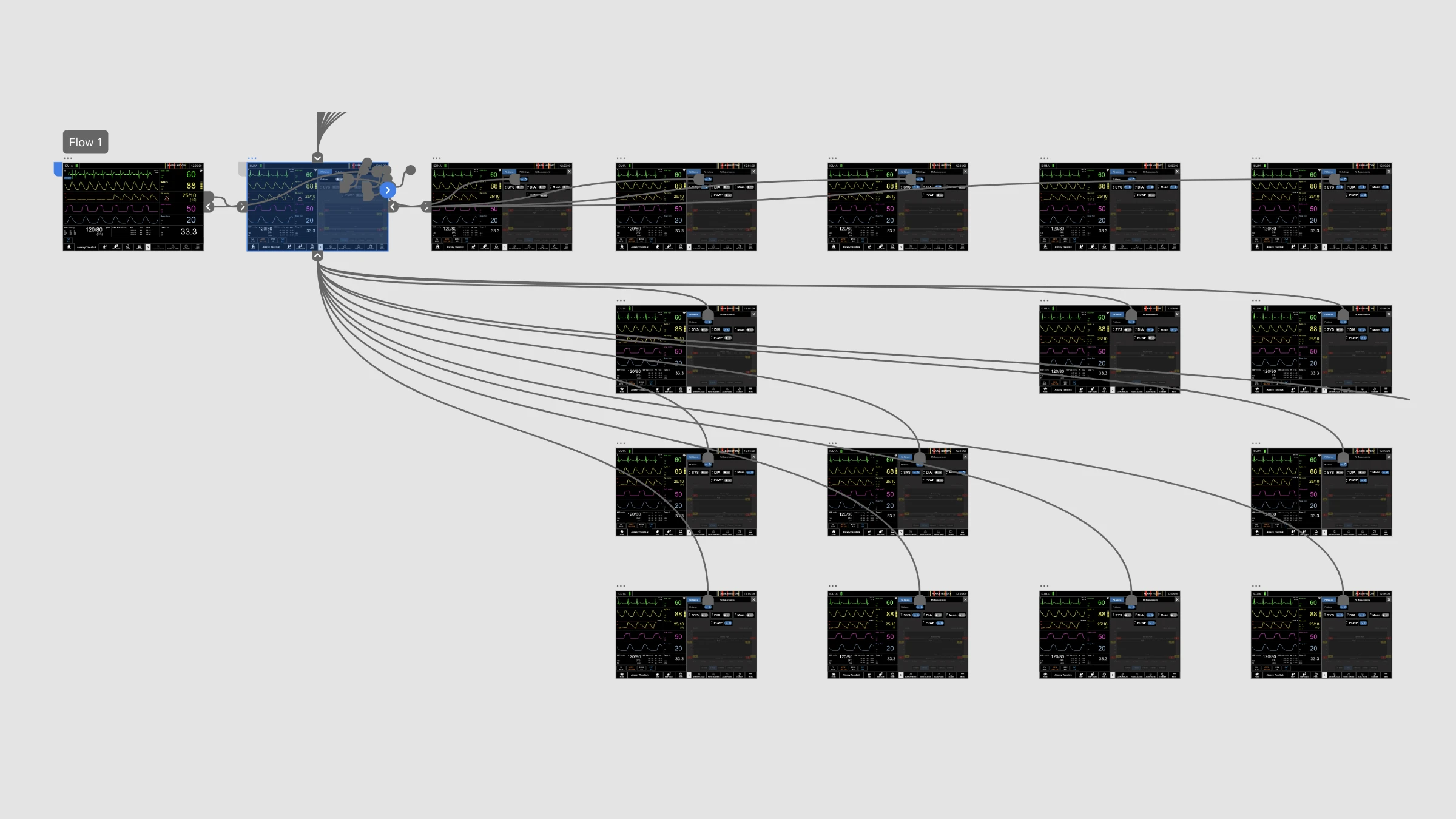
User Flows
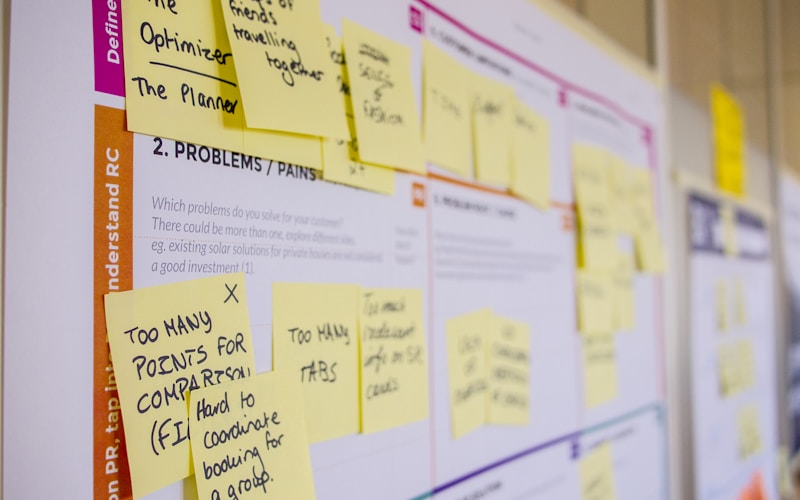
Wireframes
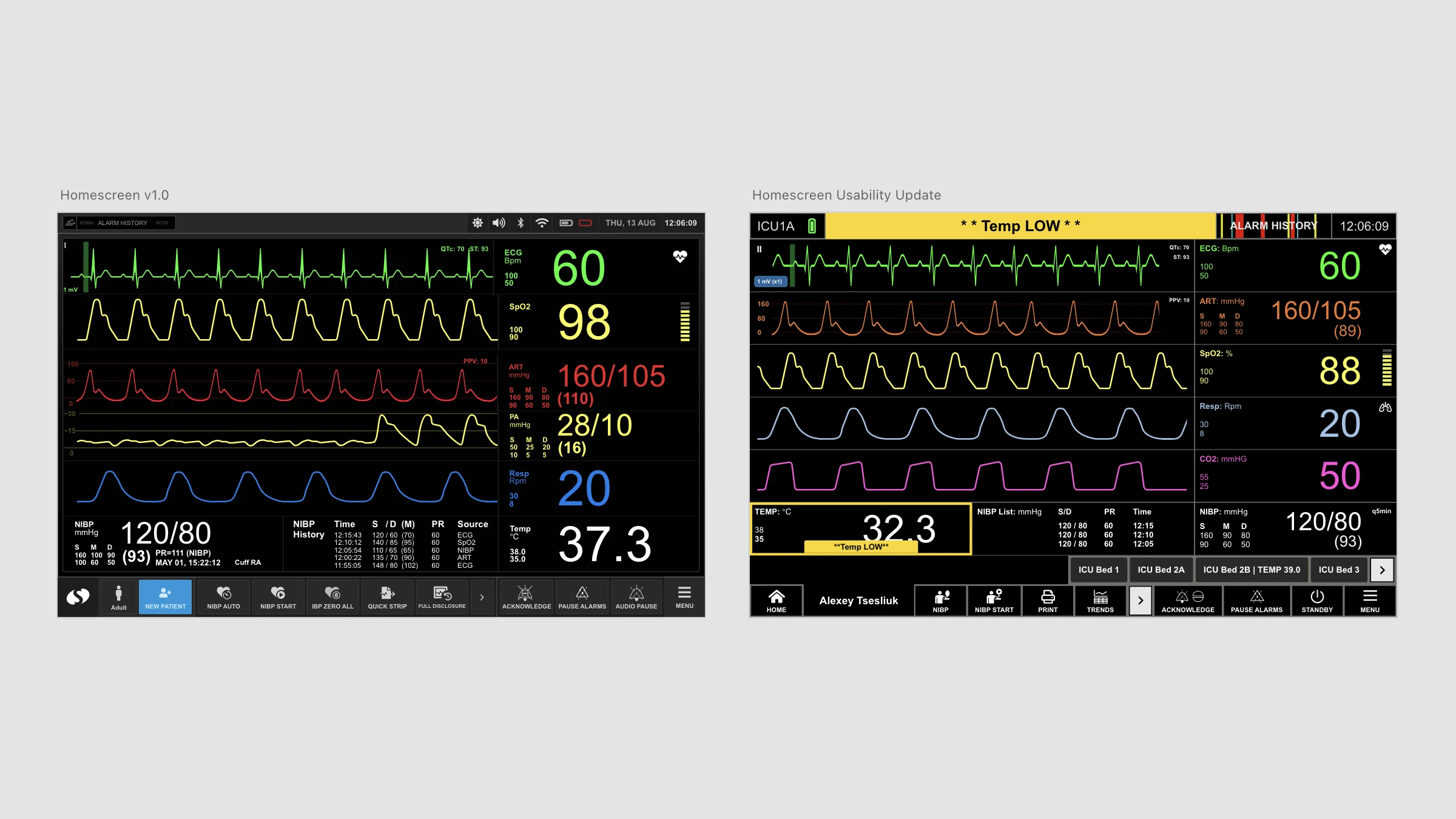
Final Design
Key Screens
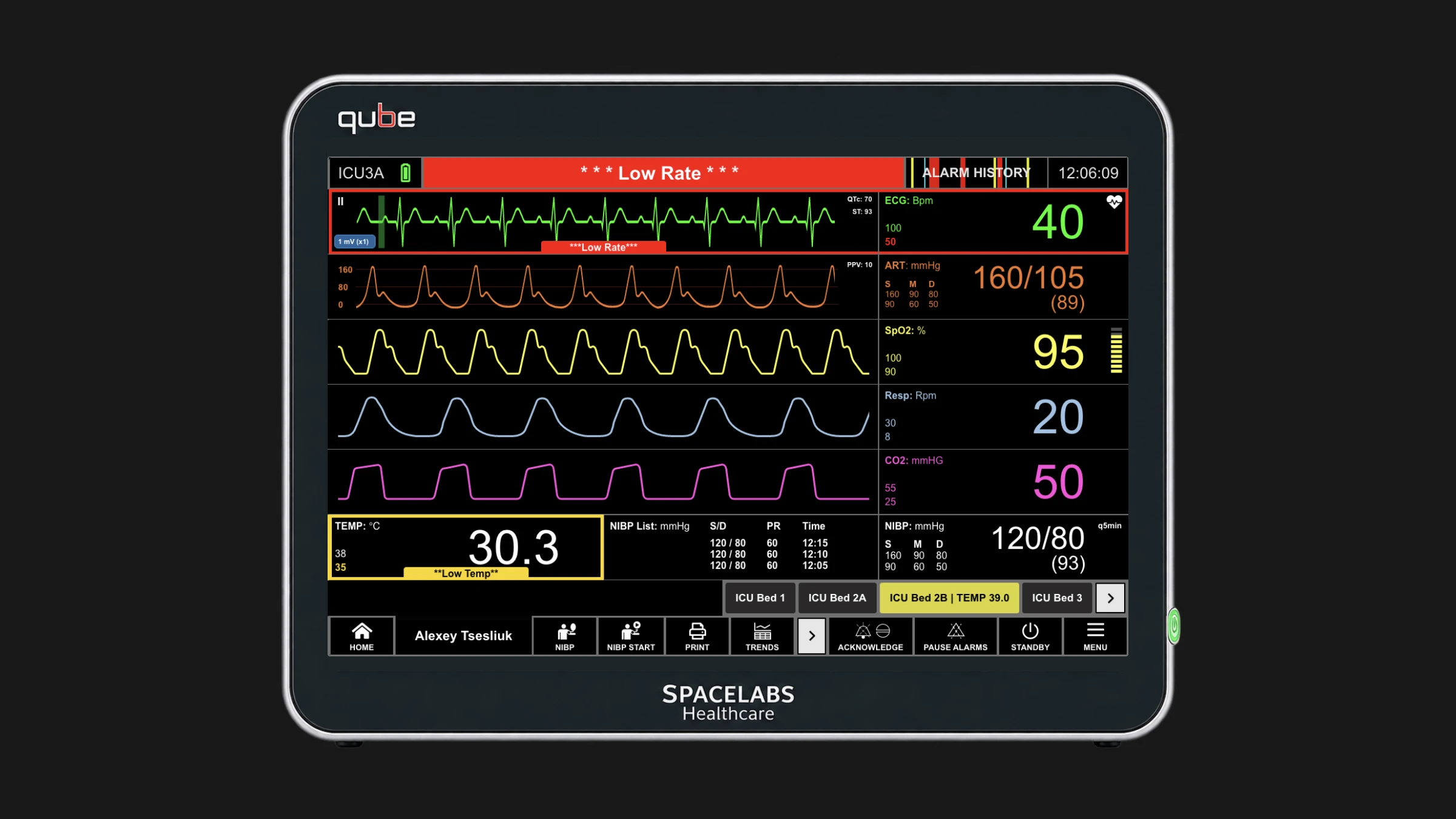
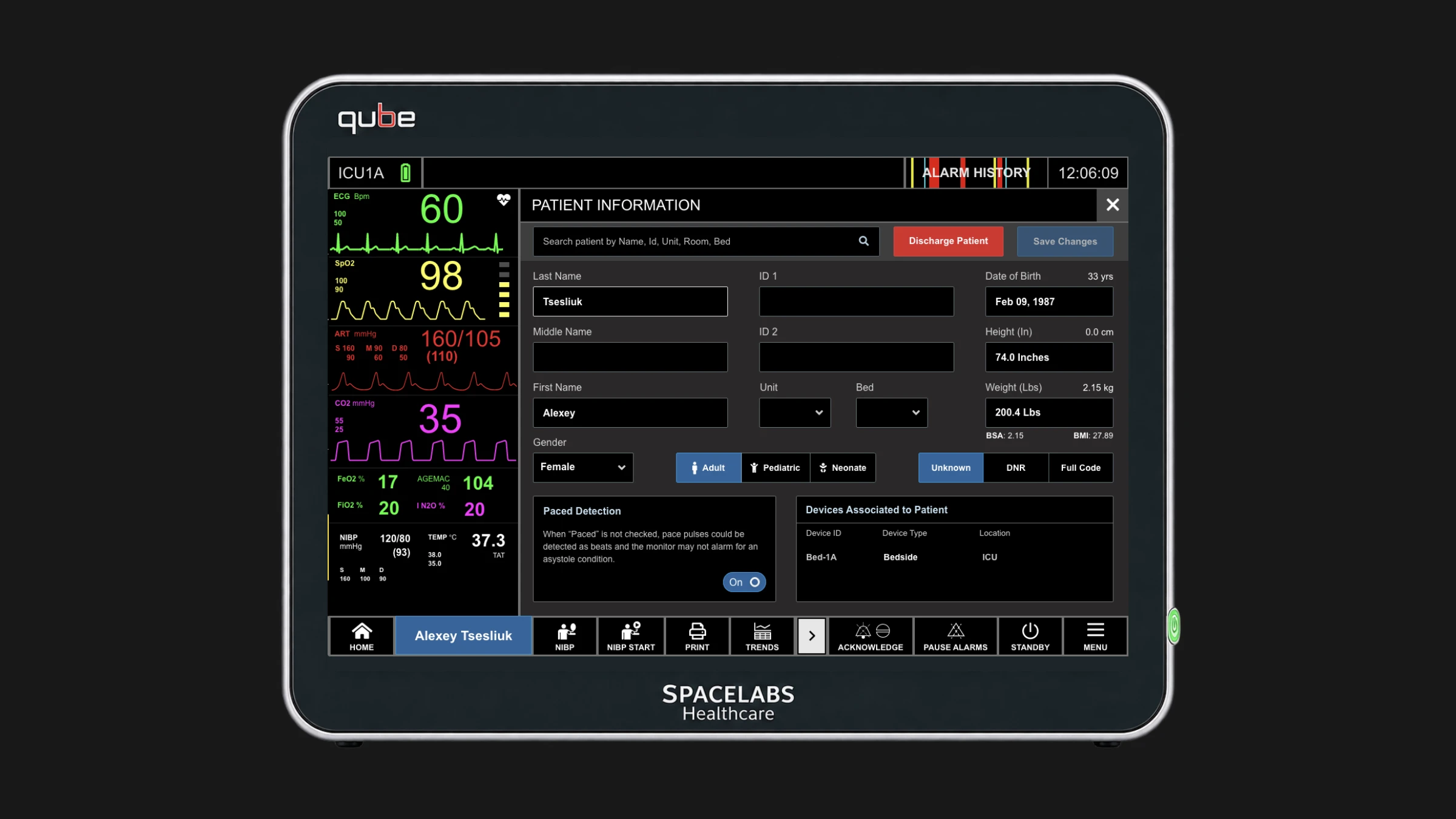
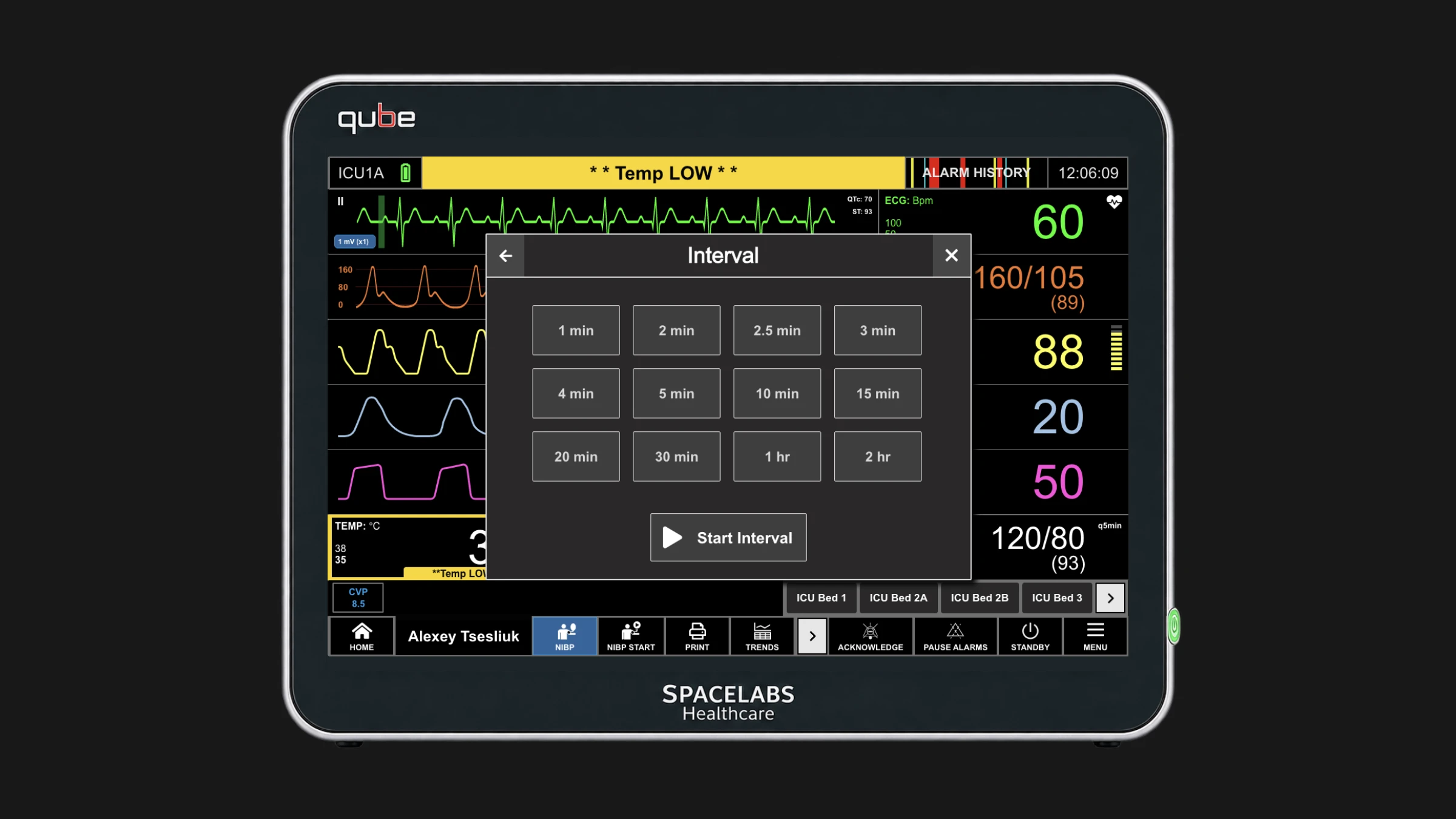
Design System
Begin to establish a unified design system across Spacelabs digital product lines. Shared color tokens, component library, and interaction patterns documented in Figma converted from XD.
Collaboration
Product Management — roadmap alignment, feature prioritization
Embedded software engineers — hardware constraint discussions
Clinical affairs team — regulatory compliance reviews
QA — accessibility audits, cross-device testing
Delivered component-level Figma specs with interaction states, and accessibility annotations from legacy Adobe XD files. Maintained weekly sync with PM team while also working with digital developers who were working on rapid response software products.
Outcome
- Unified design language adopted across 3 product lines
- Reduced alarm acknowledgment time in usability testing
- Based on nurses' feedback I created custom svg icons to better represent their workflows
- Design system reduced new-feature design time by ~40%
- Set a new standard for design consistency across agile workflows.